
About
The Botanic Garden of Smith College spans 127 acres and includes the 12,000 square foot Lyman Conservatory, Church Gallery, arboretum and many outdoor gardens. The garden was founded by Smith College’s first president, Laurenus Clarke Seelye, so that the entire campus could be of scientific, as well as aesthetic, value. Today, it continues to meet those goals.
Mission
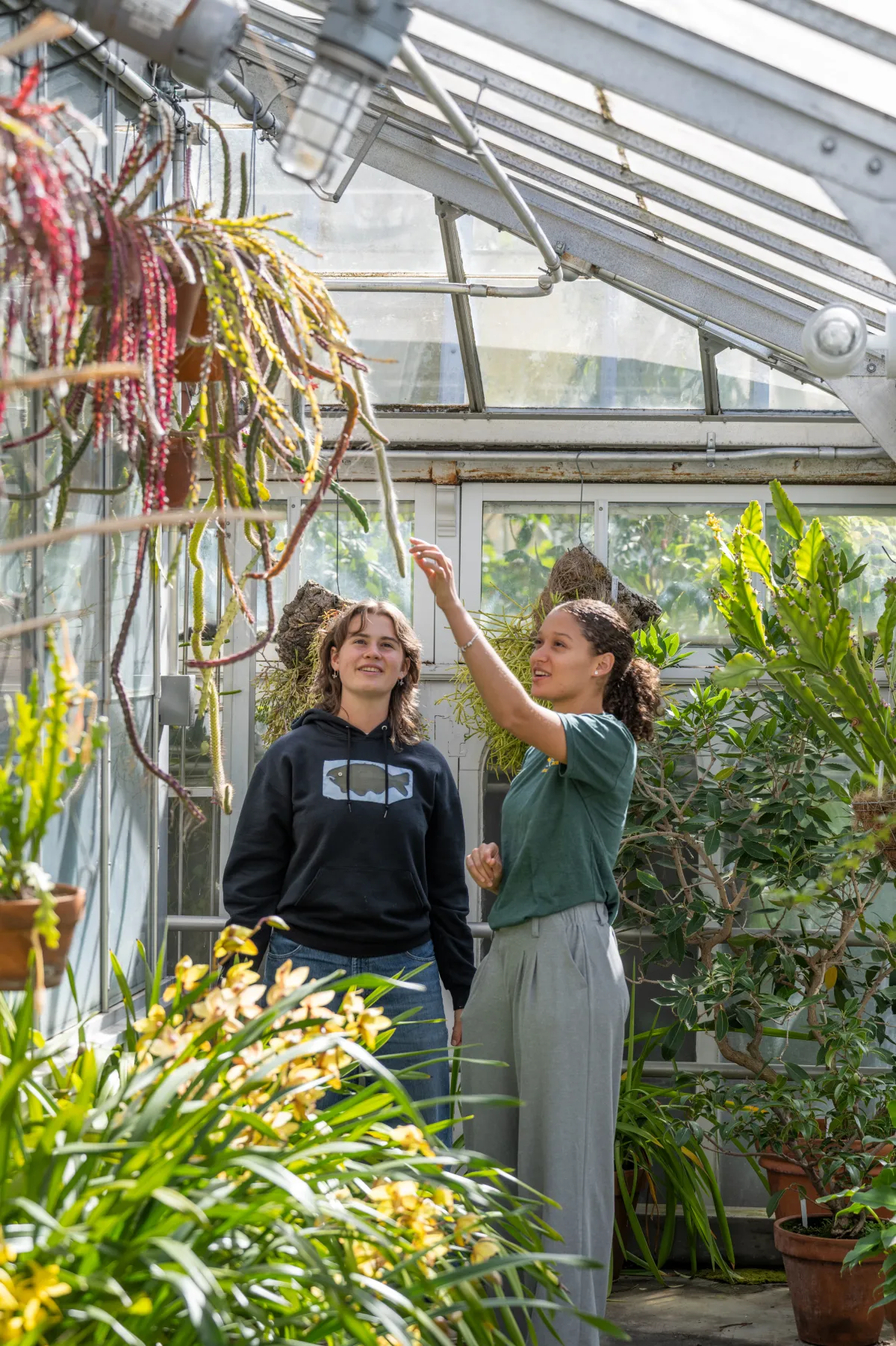
The Botanic Garden of Smith College fosters environmental and social justice through teaching and learning about plants, people and place.
We do this by:
- Curating plant collections that share stories about plant and human diversity.
- Training students to be informed thought leaders and change agents.
- Helping teachers develop integrative, learner-centered experiences.
- Welcoming visitors to explore, learn and contribute their knowledge.
- Cultivating spaces and landscapes that stimulate thought, creativity, collaboration and well-being.

Racial Justice Action Plan
In June of 2024, the botanic garden published its first Racial Justice Action Plan. The centrality of equity and inclusion in our mission statement above, and in the strategic plan that it emerged from, reflects lessons and understandings from years of a deliberate and active approach to seeing and confronting an unacceptable reality—that the botanic garden’s spaces, resources, and benefits were not being accessed equally by the full spectrum of our community. This plan was published in response to that reality.
2026 Annual Report
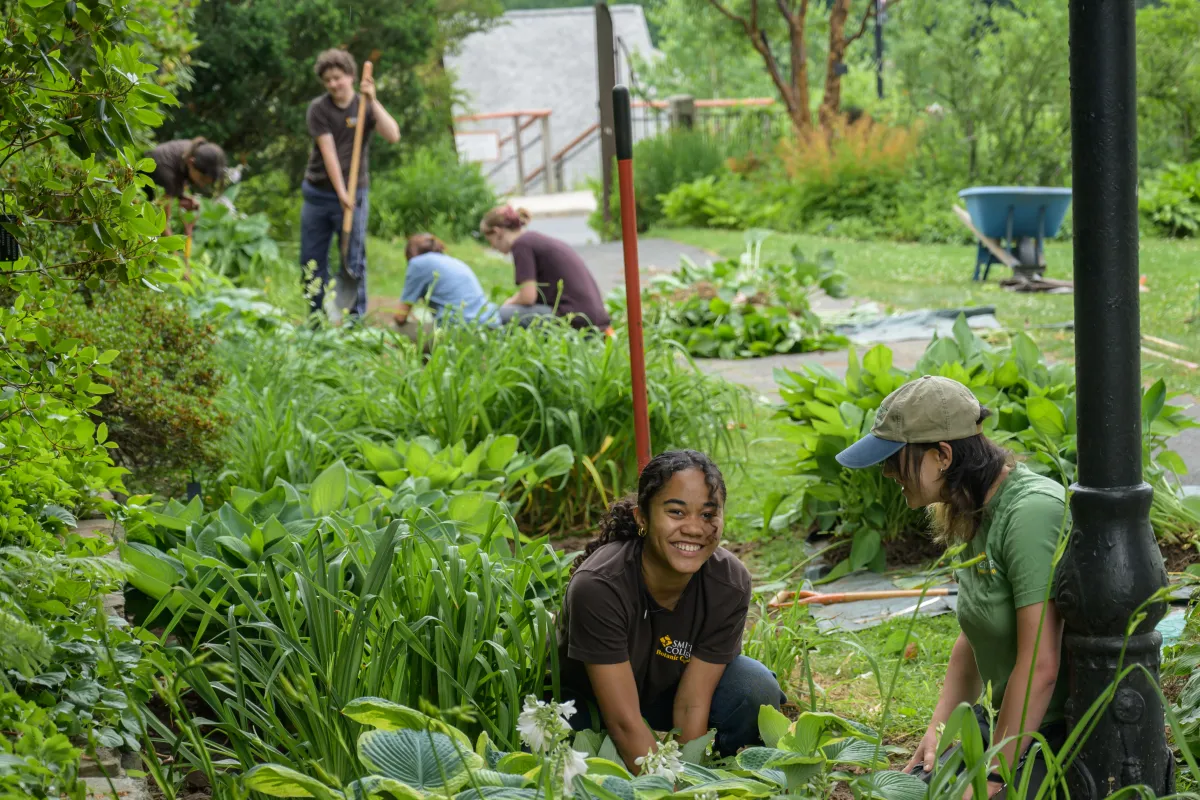
The Botanic Garden of Smith College has a global reach, which helps make our work more meaningful. For example, through an international seed-exchange program, we help botanic gardens across the world grow.
Each year, we reflect on the work we’ve done to gauge our impact, assess our work and ensure that we continue to work toward our mission. Check out our 2026 Annual Report.

History
The history of the Botanic Garden of Smith College dates back over 125 years, and is rooted in the formation of the campus itself. Learn more about the role of the botanic garden within the campus, for the students, and academic research throughout the years.